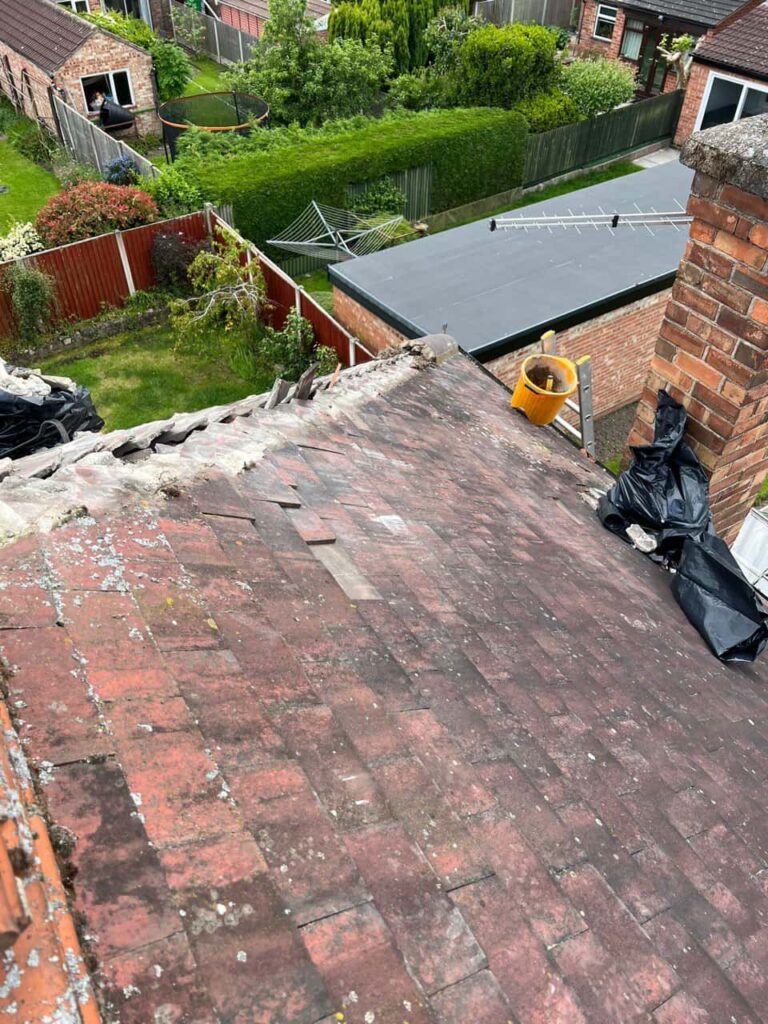
A slipped roof tile should be assessed as soon as reasonably possible, even if the property is not yet showing signs of a leak. Once a tile moves out of position, it can leave the underlay and surrounding roof components more exposed to rain, wind and further movement.
The repair may be relatively straightforward when the problem is confined to one tile. Delaying attention can allow moisture to enter, adjacent tiles to loosen or the original defect to become more extensive.
Why a Slipped Roof Tile Needs Prompt Attention
Tiles are installed in overlapping courses that work together to direct rainwater towards the guttering. When one tile slips, the intended coverage is interrupted. The level of urgency depends on its position, the weather and the condition of the surrounding roof.
Do Not Wait for an Internal Leak to Appear
The absence of visible water indoors does not mean the roof is unaffected. The underlay may temporarily prevent moisture from reaching the ceiling, but it is not intended to compensate indefinitely for a displaced tile.
Water can also travel along battens, underlay or timbers before becoming visible inside the property. By the time a damp patch appears, moisture may already have reached concealed parts of the roof.
Arrange an Inspection Promptly
A slipped tile should normally be reported when it is first noticed rather than left until the next period of wet weather. A professional inspection can establish whether the tile can be repositioned or whether it, its fixings or the supporting batten need replacement.
Early attention also gives the roofer an opportunity to check why the tile moved. Simply returning it to position without addressing the cause may lead to the same problem happening again.
Certain Signs Increase the Urgency
Some situations require particularly prompt attention. These include:
- Water entering the loft or living space
- A tile hanging loosely at the roof edge
- Several tiles moving together
- Broken fragments falling from the roof
- Visible damage to the underlay
- A slipped tile near a valley, chimney or roof junction
- Further wet or windy weather expected
- Internal staining or dampness developing
Keep people away from the area beneath a visibly loose tile and do not attempt to reach it yourself.
Wind Can Turn a Small Defect Into Wider Damage
A tile that has already moved may be more vulnerable to wind getting beneath it. Continued movement can affect neighbouring tiles, loosen fixings or cause the tile to fall.
The opening left behind may also allow wind-driven rain to travel further beneath the roof covering than ordinary rainfall. This is why a slipped tile can create problems even when the exposed area appears small from the ground.
The Tile’s Position Makes a Difference
A displaced tile near the ridge, verge, eaves, chimney or valley can affect an area where several roofing elements meet. These details are responsible for directing water away from some of the roof’s most vulnerable junctions.
A slipped tile across the main roof covering still needs attention, but movement near a junction may expose flashing, mortar or drainage details that also require inspection.
The Cause Should Be Identified
Roof tiles can move for several reasons, including:
- Failed or corroded fixings
- Deteriorated battens
- Cracks around fixing points
- Strong wind lifting the tile
- Movement within surrounding tiles
- Earlier installation defects
- Damage from impact or previous work
Understanding the cause is essential to creating a lasting repair. If the surrounding materials are sound, the work may remain localised. If battens or nearby fixings have deteriorated, a wider section may need attention.
Check for Damage Around the Slipped Tile
The displaced tile is not always the only defect. Its movement may have chipped an adjoining tile, disturbed an overlap or exposed weakened underlay.
A thorough repair should therefore include the surrounding area rather than focusing solely on the most visible problem. This reduces the likelihood of another weakness being overlooked.
Avoid Climbing Onto the Roof
A slipped tile may look easy to push back into position, but accessing a roof without suitable equipment is unsafe. Walking on the covering can also crack tiles, disturb overlaps and create additional defects.
Safe observations from ground level can still be useful. Note when the tile was first noticed, whether its position has changed and whether any fragments have fallen. Photographs taken from a safe location may help the roofer understand the affected area.
What Should a Professional Repair Include?
The appropriate repair depends on the tile and the condition beneath it. A roofer may need to:
- Reposition or replace the affected tile
- Renew damaged or failed fixings
- Check the supporting batten
- Inspect the underlay for holes or deterioration
- Realign neighbouring tiles
- Examine nearby junctions and flashing
- Confirm that no further tiles are loose
This approach addresses both the visible defect and the reason it occurred.
Conclusion
A slipped roof tile should be inspected promptly rather than monitored until water enters the property. Early repair can help preserve the underlay, protect surrounding materials and prevent one displaced tile from contributing to a wider roofing problem.
LJ Roofing Penhill provides professional roof inspections and slipped tile repairs in Penhill, Wiltshire. If you have noticed a tile out of position, contact us to arrange an assessment and determine the repair required.
Call us on: 01793 569 094
Click here to find out more about LJ Roofing Penhill
Click here to complete our contact form and see how we can help with your roofing needs.