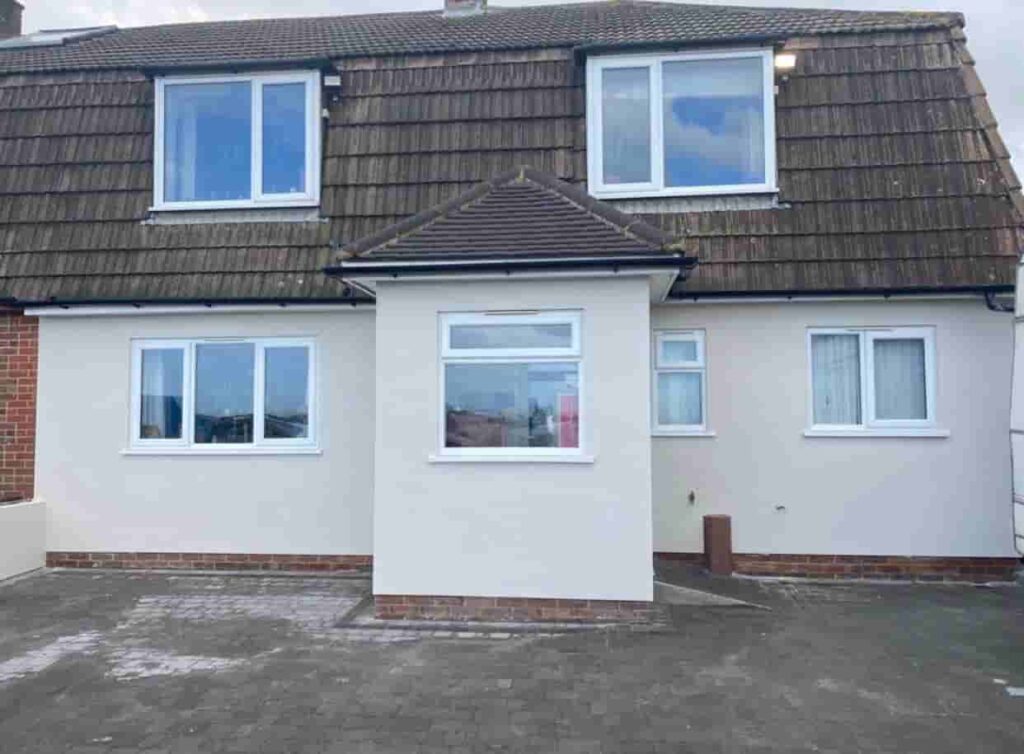
A roof leak that returns after previous repairs can be particularly frustrating. While an isolated leak may be caused by a single damaged tile, failed flashing detail or another localised defect, repeated water ingress can suggest that the original repair has not addressed the true source of the problem or that deterioration extends beyond one small area.
For property owners in Penhill, Wiltshire, a recurring roof leak should be treated as a reason to reassess the affected roof rather than simply repeat the same repair. At LJ Roofing Penhill, we focus on identifying why water is entering and determining whether targeted repairs remain appropriate or whether a different roofing solution is needed.
Why Do Some Roof Leaks Keep Coming Back?
A recurring leak does not necessarily mean that every previous repair was ineffective. Roofs are made up of numerous interconnected components, and several defects can sometimes develop within the same area.
Common reasons for repeated leaks include:
- Deterioration affecting several roof tiles
- Ageing or damaged underlay
- Defective flashing
- Problems around roof junctions
- Deterioration within valleys
- Weaknesses around roof penetrations
- Previous repairs addressing symptoms rather than causes
- Wider deterioration across an ageing roof covering
Understanding which of these factors is responsible is essential before deciding what should happen next.
The Visible Damp Patch May Not Be Below the Leak
One of the challenges with recurring roof leaks is locating the actual entry point.
Water entering beneath a roof covering can travel along underlay, rafters and other components before eventually reaching the ceiling. As a result, the damp patch visible inside the property may be some distance from the external defect.
Repeatedly repairing the area directly above an internal stain can therefore be ineffective if the water is entering elsewhere.
A thorough assessment should consider the likely route of moisture rather than relying solely on the position where it finally becomes visible.
When a Small Repair May Still Be Appropriate
A recurring leak does not automatically mean substantial roofing work is required.
Further localised repairs may remain appropriate when an inspection identifies a specific, repairable defect and the surrounding roof is otherwise performing correctly.
For example, the problem may involve a limited section of flashing, several damaged tiles or a particular roof junction.
The important distinction is whether the defect is genuinely isolated or part of wider deterioration.
Repeated Tile Problems Can Indicate Something Deeper
Replacing an occasional cracked or slipped tile is a normal roofing repair. However, when tiles repeatedly move or deteriorate within the same section, it is worth investigating the components supporting them.
Problems may involve:
- Tile fixings
- Roofing battens
- Underlay
- The condition of surrounding tiles
- Previous installation details
Replacing the visible tile without considering these elements may leave the underlying weakness unresolved.
Ageing Underlay Can Contribute to Recurring Water Ingress
Tiles and slates provide the primary external roof covering, while the underlay beneath them forms an important secondary layer of protection.
Over time, older underlay can become brittle, damaged or deteriorated. If water gets beneath the main roof covering, weakened underlay may no longer provide the same secondary protection.
Where repeated leaks are occurring on an older roof, assessing the condition beneath the visible covering can therefore be important.
Flashing Problems Need More Than a Temporary Patch
Flashing protects vulnerable junctions where different roofing surfaces and structures meet.
If flashing is deteriorating extensively, treating one visible gap may not resolve weaknesses elsewhere along the same detail. Water can continue entering through another point and produce very similar internal symptoms.
Recurring dampness around roof junctions should therefore prompt a careful assessment of the complete flashing detail rather than repeated attention to one small section.
Roof Valleys Can Cause Persistent Problems
Valleys carry substantial volumes of rainwater because they receive runoff from adjoining roof slopes.
When a valley deteriorates or develops defects, leaks may become particularly noticeable during prolonged or heavy rainfall.
If previous localised work has not resolved repeated water ingress around a valley, the complete condition of that feature and the surrounding roofing should be assessed. A more comprehensive repair may provide a more dependable solution than continuing to patch individual points.
Flat Roof Leaks Can Require Wider Investigation
Recurring leaks on flat roofs can be difficult to diagnose from the internal damp patch alone.
Water may travel beneath sections of the covering before entering the building, and defects around edges, outlets or junctions can contribute to the problem.
Where the covering has deteriorated more generally, repeatedly treating individual visible defects may become less effective. Assessing the condition of the complete flat roof area helps determine whether repair remains suitable or whether renewal of a larger section should be considered.
Previous Repairs Can Provide Useful Clues
The history of a leaking roof can help identify what is happening.
If one small area has been repaired several times but water ingress continues, it is worth considering whether the original diagnosis was incomplete.
Similarly, if different sections of the same roof require frequent attention, the issue may no longer be confined to isolated defects.
A professional roofer should consider both the current problem and the pattern of previous repairs when assessing the most appropriate next step.
When Does a Roof Need a Different Approach?
There is no single number of leaks or previous repairs that automatically means a roof needs more extensive work.
Instead, the overall pattern matters.
A different solution may need consideration where there is:
- Repeated leaking from the same general area
- Widespread deterioration of roofing materials
- Numerous previous repairs
- Recurring tile movement
- Deteriorated underlying components
- Several different points of water ingress
- An ageing roof with defects appearing increasingly frequently
In these situations, continuing to treat individual symptoms may become less effective than addressing the affected roof section more comprehensively.
Could Partial Renewal Solve the Problem?
Not every recurring leak requires complete roof replacement.
Where deterioration is concentrated within one clearly defined section, it may be possible to renew that area while retaining sound roofing elsewhere.
This provides an opportunity to address the roof covering and relevant underlying components within the affected section rather than repeatedly repairing individual defects.
Whether this is suitable depends entirely on the construction and condition of the individual roof.
When Might Roof Replacement Be More Appropriate?
Where deterioration is widespread and recurring leaks form part of a broader pattern of roofing problems, complete replacement may eventually provide the more appropriate solution.
A new roof allows the existing covering to be removed so that underlying components can be properly assessed and the roofing system reconstructed where required.
Replacement should not be recommended simply because a roof has leaked more than once. It becomes relevant when the overall condition shows that repeated local repairs are no longer addressing the wider deterioration.
Why Accurate Diagnosis Matters
The best roofing repair is not necessarily the largest one. It is the work that addresses the actual cause of the problem.
At LJ Roofing Penhill, we assess recurring roof leaks throughout Penhill, Wiltshire, with attention to the complete affected area. Tiles, flashing, valleys, junctions and underlying components can all be considered when determining how water is entering.
This approach helps distinguish between a straightforward local repair and a problem requiring a more comprehensive roofing solution.
Do Not Wait for the Next Period of Heavy Rain
A leak that disappears during dry weather has not necessarily resolved itself.
If the underlying defect remains, water ingress can return when weather conditions expose the same weakness again. Repeated wetting can also allow deterioration to continue beyond the original defect.
Having a recurring problem assessed before the next significant rainfall provides an opportunity to identify the cause while the issue may still be manageable.
Conclusion
A roof that continues leaking after previous repairs deserves a fresh assessment. The problem may still be localised, but recurring water ingress can also indicate deteriorated flashing, ageing underlay, defective valleys, repeated tile problems or wider deterioration within the roofing system.
Rather than automatically carrying out another repair in the same place, the priority should be establishing exactly how water is entering and whether the existing repair strategy remains appropriate. In some cases, a targeted repair will still be sufficient; in others, partial renewal or a more comprehensive roofing solution may provide a more dependable result.
If your roof in Penhill, Wiltshire, has started leaking again, LJ Roofing Penhill can assess the affected area and determine why the problem keeps returning. Contact our team to arrange a professional inspection and discuss the most appropriate solution for restoring reliable weather protection to your roof.
Call us on: 01793 569 094
Click here to find out more about LJ Roofing Penhill
Click here to complete our contact form and see how we can help with your roofing needs.